

Key Features of a Great Trading App and Platform
- Low fees – Every pip counts when you’re trading regularly
- Fast execution – Slippage kills profits during volatile moves
- Good regulation – Your money needs protection from licensed authorities
- Easy withdrawals – Getting your cash out should be simple and quick
- Decent leverage – More flexibility in position sizing
- Multiple markets – Trade forex, crypto, and other assets from one account
- Solid mobile app – Trade from anywhere without compromising functionality
- Reliable customer support – Problems happen, and you need real help fast
- Demo account – Test everything before risking real money
- Clear charting tools – Basic technical analysis shouldn’t require extra software
- Low minimum deposit – Start small and scale up as you learn
Best Forex and Crypto Trading Platforms and Apps
| Best For | Commision | Min Dep | Leverage | Platforms | ||
|---|---|---|---|---|---|---|
 IQ Option | Beginners, Professionals | No commission on standard accounts | $10 | Up to 1:1000 | IQ Option Platform Mobile App | |
 Oanda | Active Traders, Beginners | No commission | $1 | Up to 1:50 | MetaTrader 4 OANDA Platform | |
 AvaTrade | Beginners, Professionals, Active Traders | From $5 per lot | $100 | Up to 1:400 | AvaTradeGo MetaTrader 4 MetaTrader 5 | |
 Binance | Crypto traders & investors | From 0.1% per trade | $10 | Up to 1:125 | Web Desktop Mobile App | |
 eToro | Social and Copy traders | No commission | $200 | Up to 1:30 (retail) | eToro Platform Web MT4 Mobile App | |
 FXTM | Beginners,Scalpers, Active Traders | No commission | $200 | Up to 1:1000 | WebTrader MetaTrader 4 MetaTrader 5 | |
 Plus500 | CFD traders | No commission | $100 | Up to 1:30 | WebTrader Mobile App | |
 RoboForex | Active Traders, Scalpers | No commission | $10 | Up to 1:2000 | MT4 MT5 R StocksTrader | |
 XM | Beginners, Proffesionals | No commission | $5 | Up to 1:1000 | MetaTrader 4 MetaTrader 5 | |
 Pepperstone | Beginners, Active Traders, Scalpers | No commission | $200 | Up to 1:500 | MetaTrader 4 MetaTrader 5 cTrader | |
 Kraken | Crypto traders, Investors | From 0.16% (maker) / 0.26% (taker) | $10 | Up to 1:5 | Kraken Kraken Pro Mobile App | |
 IG Markets | Professional and active traders | No commission | $0 | Up to 1:200 | ProRealTime Web platform MetaTrader 4 | |
 Admiral Markets | Beginners, Professionals, Active Traders | From $6 per lot | $100 | Up to 1:500 | MetaTrader 4 MetaTrader 5 Ctrader | |
 Interactive Brokers | Professional traders | Very low | $0 | Up to 1:50 | TWS IBKR Mobile WebTrader |
The platforms below have been tested under real trading conditions. Each one brings different strengths to the table. Some nail forex execution but offer limited crypto. Others dominate crypto markets but treat forex as an afterthought. Your choice depends on what you trade most and how much capital you’re starting with.
IG Group

IG Group Overview
IG Group has 50 years in the market. That’s serious longevity. Their platform handles over 17,000 markets including forex, crypto, stocks, and commodities. Daily research from their analysis team covers technical and fundamental factors.
The proprietary platform includes advanced charting and risk tools. Mobile app works smoothly without the lag you get from some brokers. Spread betting is available for UK clients, offering tax advantages. Crypto goes beyond Bitcoin and Ethereum to include smaller altcoins.
Pros:
- 50 years of market presence and stability
- Strong regulation from FCA and ASIC
- Access to 17,000+ markets
- Quality daily research and analysis
- Advanced charting tools included
- Spread betting option for UK traders
- Wide crypto selection (15+ coins)
- Reliable mobile app performance
Cons:
- $250 minimum deposit excludes small accounts
- Spreads start at 0.6 pips, not the tightest
- Overnight fees on crypto positions
- 1:30 leverage limit for retail traders
- Withdrawal takes 1-2 business days
- Platform can overwhelm beginners
- Higher costs for infrequent traders
Binance
Binance Overview
Binance dominates global crypto trading volume. Over 350 coins listed with deep liquidity on major pairs. Their fee structure rewards volume with tiered discounts. The platform includes spot, futures, options, and margin accounts all in one place.
Advanced order types include OCO, iceberg, and post-only limits. Staking and earn products let you generate passive income. Security measures include SAFU fund coverage and mandatory 2FA. Forex trading exists through broker partners but crypto remains their strength.
Pros:
- Largest crypto exchange by volume
- 350+ cryptocurrencies available
- Low trading fees starting at 0.1%
- Fast withdrawals in 15-30 minutes
- Deep liquidity on major pairs
- Staking and earn features for passive income
- Advanced order types for professionals
- SAFU fund protects against hacks
Cons:
- Overwhelming interface for beginners
- Forex trading is secondary through partners
- Regulation varies by jurisdiction
- Customer support delays during busy periods
- Complex fee structure across products
- Not ideal for pure forex traders
- Learning curve is steep
- Too many features can confuse new users
eToro

eToro Overview
eToro made copy trading mainstream. The CopyTrader feature lets you replicate trades from profitable traders automatically. Risk scores and verified performance stats help you choose who to follow. Good for learning market mechanics while trading.
You can hold actual crypto through their Money wallet. Forex trades as CFDs with standard specs. The platform keeps things simple with a social media feel. Weekend fees apply to crypto positions, which adds up on longer holds.
Pros:
- Copy trading from verified traders
- Low $50 minimum deposit
- Simple, user-friendly interface
- Actual crypto ownership through wallet
- Social trading community features
- Good for beginners learning
- FCA and CySEC regulated
- 70+ cryptocurrencies available
Cons:
- Spreads start at 1.0 pips (wide)
- Weekend fees on crypto positions
- Copy trading doesn’t guarantee profits
- Withdrawal takes 1-3 days
- Limited advanced trading tools
- Inactivity fees after 12 months
- 1:30 leverage cap for retail
- Customer support can be slow
Kraken

Kraken Overview
Kraken focuses on crypto first with forex as a side offering. Strong security track record with no major hacks since launch. The platform supports staking on coins like Ethereum and Polkadot for passive yield. API documentation suits algorithmic traders.
Kraken Pro provides professional charting and order book depth. Margin trading offers 5x leverage on select pairs. Fiat deposits work through bank transfers. Card purchases cost extra at 3.75%. Support quality improved but still lags during high volume.
Pros:
- Strong security with no major hacks
- 200+ cryptocurrencies listed
- Staking services for passive income
- Professional charting on Kraken Pro
- Good API for algorithmic trading
- Low $10 minimum deposit
- Margin trading up to 5x
- Order book depth transparency
Cons:
- Forex is secondary to crypto
- Only 1:5 leverage available
- Withdrawal takes 1-3 days
- 3.75% fee on card purchases
- Customer support delays in busy times
- Interface less intuitive than competitors
- Not ideal for forex-focused traders
- Bank transfers only for deposits
XM
XM Overview
XM is a global broker trusted by over 10 million clients worldwide. It offers access to forex, CFDs, commodities, and indices through MetaTrader 4 and 5, known for tight spreads and fast order execution. The broker operates under strict regulation by CySEC, ASIC, and FSC, ensuring high standards of safety and transparency.
Pros:
- Regulated by multiple top-tier authorities (CySEC, ASIC, FSC)
- Very low spreads and fast execution
- Supports MT4 and MT5 platforms
- Excellent educational resources and webinars
- Negative balance protection
Cons:
- Limited cryptocurrency offering
- No access to stock trading for some regions
RoboForex
RoboForex Overview
RoboForex is a well-established international broker that offers over 12,000 trading instruments, including forex, stocks, crypto, and ETFs. It provides a range of account types, high leverage (up to 1:2000), and bonuses for active traders. RoboForex is regulated by the IFSC (Belize).
Pros:
- High leverage up to 1:2000
- Wide selection of trading instruments and platforms
- Attractive bonuses and cashback programs
- Fast deposits and withdrawals
- Low minimum deposit ($10)
Cons:
- Offshore regulation (IFSC) provides weaker investor protection
- Limited educational materials compared to top-tier brokers
- Customer support can be inconsistent in response times
- Interface feels outdated on some platforms
- Complex account structure may confuse beginners
IQ Option
IQ Option Overview
IQ Option simplified forex and crypto CFD trading into a clean interface. Started with binary options then expanded to traditional markets. Trading tournaments add competition with real prize pools. Multipliers function like leverage but cap maximum losses.
Video tutorials prepare new traders before going live. Practice accounts use real market data. The proprietary platform lacks MT4/MT5, which might put off experienced traders. Crypto selection stays limited compared to dedicated exchanges.
Pros:
- Very low $10 minimum deposit
- High leverage up to 1:1000
- Simple, clean interface
- Trading tournaments with prizes
- Multipliers limit downside risk
- Extensive video tutorials
- Free demo account with real data
- Quick account setup
Cons:
- No MT4 or MT5 support
- Variable spreads can widen
- Limited crypto selection
- Only CySEC regulation
- Withdrawal takes 1-3 days
- Advanced tools are lacking
- Started as binary options broker
- Fewer educational resources than competitors
Plus500
Plus500 Overview
Plus500 strips trading down to basics. Simple CFD platform without complex features. Dynamic spreads widen during volatility, which is standard but worth knowing. No commissions—they profit from spread markup instead.
Overnight financing fees hit leveraged positions. Guaranteed stop losses cost extra but eliminate slippage completely. Crypto trades as CFDs without actual coin ownership. Platform processes orders quickly but doesn’t support scalping strategies.
Pros:
- Simple, straightforward interface
- No commissions on trades
- Guaranteed stops available
- Multiple regulation from FCA, CySEC
- Quick trade execution
- Clean mobile app design
- Crypto CFDs available
- Good for casual traders
Cons:
- $100 minimum deposit required
- Dynamic spreads widen in volatility
- Overnight fees on leveraged trades
- No scalping allowed
- 1:30 leverage cap for retail
- Minimal educational content
- No actual crypto ownership
- Limited advanced tools
OANDA

OANDA Overview
OANDA built trust through transparent pricing. Fractional pip pricing means spreads can be tighter than standard increments. Zero minimum deposit removes barriers completely. Historical data helps with strategy backtesting.
TradingView charts integrate directly into the platform. API access supports automated trading systems. No crypto for most account types—they focus on forex and CFD markets. Strong educational materials covering both fundamental and technical analysis.
Pros:
- $0 minimum deposit
- Fractional pip pricing for tighter spreads
- Strong CFTC and FCA regulation
- Integrated TradingView charts
- API for automated trading
- Extensive historical data
- Quality educational materials
- Transparent pricing model
Cons:
- Low leverage at 1:50 (US clients)
- No cryptocurrency trading
- Withdrawal takes 1-5 days
- Spreads start at 1.0 pips
- Limited to forex and CFDs
- US regulations restrict features
- Customer support not 24/7
- Fewer trading tools than competitors
FXTM (ForexTime)

FXTM (ForexTime) Overview
FXTM delivers solid forex execution through MT4 and MT5. ECN accounts provide raw spreads with commission added. Better for larger position sizes. Standard accounts suit smaller trades. Copy trading connects you with strategy managers.
Performance metrics show monthly returns and drawdowns. Platform takes 20% of profits on copied trades. Crypto availability stays limited to major coins. Good educational content including free webinars. Standard withdrawal processing without instant options.
Pros:
- Low $10 minimum deposit
- High leverage up to 1:2000
- MT4 and MT5 support
- ECN accounts with raw spreads
- Copy trading services available
- Free educational webinars
- FCA and CySEC regulated
- Decent customer support
Cons:
- Spreads start at 1.3 pips on standard
- Limited crypto selection
- 20% performance fee on copy trading
- No instant withdrawals
- Withdrawal takes 1-2 days
- ECN accounts better for large positions
- Educational content assumes basic knowledge
- Swap fees on overnight trades
AvaTrade

AvaTrade Overview
AvaTrade supports multiple platforms including MT4, MT5, and WebTrader. AvaOptions handles options trading separately. Fixed spreads stay constant during market volatility. No commissions on standard forex pairs.
Automated trading through DupliTrade and ZuluTrade. Copy successful traders easily. Mobile apps work smoothly across devices. Crypto CFDs cover 15+ assets. Negative balance protection and segregated funds protect clients.
Pros:
- Multiple platform choices
- Fixed spreads during volatility
- No commission on forex
- Leverage up to 1:400
- Automated copy trading available
- 15+ crypto CFDs
- Negative balance protection
- Segregated client funds
Cons:
- $100 minimum deposit
- Spreads start at 0.9 pips
- Withdrawal takes 1-2 days
- Fixed spreads can be wider
- Inactivity fees apply
- No actual crypto ownership
- AvaOptions separate platform
- Educational content is basic
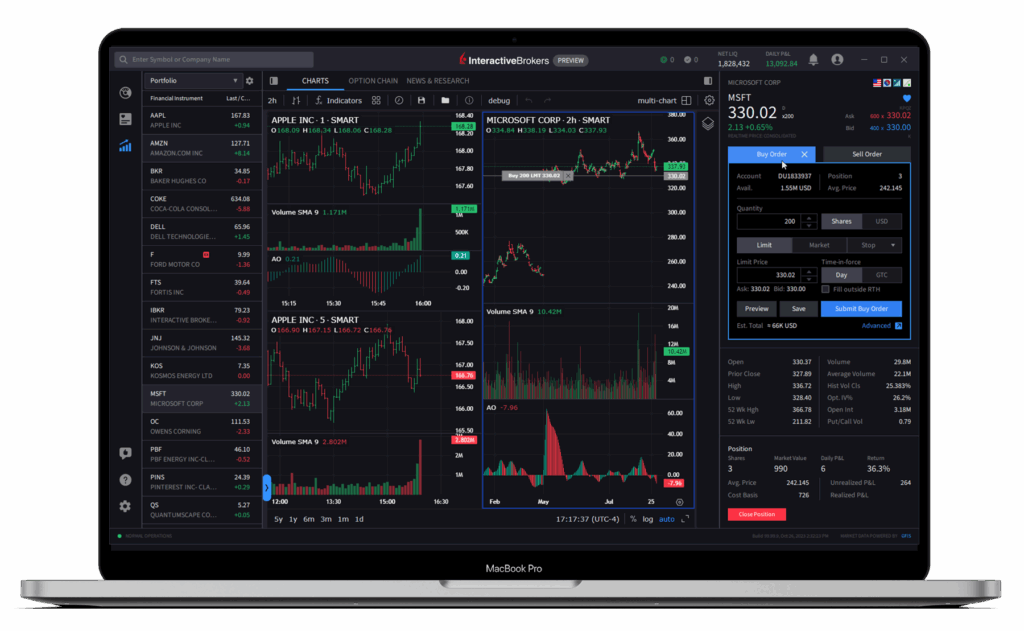
Interactive Brokers
Interactive Brokers Overview
Interactive Brokers targets professionals with direct market access. Connection to 150 markets globally. Commission structure favors high-volume traders through tiered pricing. Light traders pay more per trade.
Trader Workstation requires learning time but offers extensive customization. Portfolio margin reduces capital requirements for qualified accounts. Real-time risk analytics included. Crypto trades through Paxos with four coins available.
Pros:
- $0 minimum deposit
- Access to 150 global markets
- Strong SEC and CFTC regulation
- Portfolio margin available
- Real-time risk analytics
- Tiered pricing for volume traders
- Professional-grade platform
- Direct market access
Cons:
- Steep learning curve on TWS
- Low leverage at 1:50
- Commission-based pricing
- Withdrawal takes 1-4 days
- Only 4 cryptocurrencies
- Complex interface overwhelms beginners
- Better for large accounts
- Inactivity fees apply
Pepperstone

Pepperstone Overview
Pepperstone delivers tight spreads and fast execution. Razor accounts offer ECN pricing with commission. Standard accounts add spread markup instead. cTrader platform provides an alternative to MetaTrader.
Smart Trader Tools include correlation matrices and sentiment indicators. Free VPS hosting for accounts over $5,000. Twenty crypto assets available. Copy trading integrates through Myfxbook and DupliTrade. Withdrawals process within 24 hours on business days.
Pros:
- $0 minimum deposit
- Raw spreads from 0.0 pips
- Fast execution speeds
- cTrader platform support
- 20+ cryptocurrencies
- Free VPS for funded accounts
- Withdrawal within 1 business day
- Smart Trader Tools included
Cons:
- Commission on Razor accounts
- 1:500 leverage may be restricted
- cTrader has learning curve
- Standard accounts have markup
- Business days only for withdrawals
- VPS requires $5,000 balance
- Copy trading through third parties
- Educational content is limited
Admirals

Admirals Overview
Admirals is a highly trusted European broker founded in 2001, offering forex, CFDs, stocks, ETFs, and commodities trading. It’s known for transparency, strong regulation, and excellent educational and analytical resources. Admirals supports MT4 and MT5, providing both retail and professional accounts. It’s regulated by FCA (UK), ASIC (Australia), CySEC (Cyprus), and JSC (Jordan).
Pros:
- Strong regulation (FCA, ASIC, CySEC)
- Transparent fee structure
- Excellent analytics and educational materials
- Supports copy trading and automated strategies
- Reliable customer service
Cons:
- Slightly higher spreads compared to some ECN brokers
- Limited crypto CFD options
- No proprietary trading platform (only MT4/MT5)
- Inactivity fee after 24 months of no trading activity
Comparing the Top Platforms
| Platform | Min Deposit | Max Leverage | Spreads From | Withdrawal Speed | Crypto Available | Regulation |
|---|---|---|---|---|---|---|
| IG Group | $250 | 1:30 | 0.6 pips | 1–2 days | Yes (15+ coins) | FCA, ASIC |
| Binance | $10 | 1:125 | 0.1% fee | 15–30 min | Yes (350+ coins) | Various |
| eToro | $50 | 1:30 | 1.0 pips | 1–3 days | Yes (70+ coins) | FCA, CySEC |
| Kraken | $10 | 1:5 | 0.16% fee | 1–3 days | Yes (200+ coins) | FinCEN, FCA |
| IQ Option | $10 | 1:1000 | Variable | 1–3 days | Yes (limited) | CySEC |
| Plus500 | $100 | 1:30 | Dynamic | 1–3 days | Yes (CFDs only) | FCA, CySEC |
| FXTM | $10 | 1:2000 | 1.3 pips | 1–2 days | Yes (limited) | FCA, CySEC |
| OANDA | $0 | 1:50 | 1.0 pips | 1–5 days | No | CFTC, FCA |
| AvaTrade | $100 | 1:400 | 0.9 pips | 1–2 days | Yes (15 CFDs) | CBI, ASIC |
| Interactive Brokers | $0 | 1:50 | $0.20/1000 units | 1–4 days | Yes (4 coins) | SEC, CFTC |
| Pepperstone | $0 | 1:500 | 0.0 pips | 1 day | Yes (20+ coins) | FCA, ASIC |
| XM | $5 | 1:1000 | 0.0 pips | 1–2 days | Yes (limited) | CySEC, ASIC, FSC |
| RoboForex | $10 | 1:2000 | 0.0 pips | Instant–1 day | Yes (40+ coins) | IFSC |
| Admirals | $25 | 1:500 | 0.5 pips | 1–3 days | Yes (10+ coins) | FCA, ASIC, CySEC |
When comparing these platforms, several key factors stand out for traders choosing between traditional brokers and modern multi-asset providers.
Withdrawal speed remains one of the most important considerations. Platforms such as Pepperstone, RoboForex, and often process withdrawals instantly or within hours, offering unmatched convenience. In contrast, more traditional brokers like IG Group, AvaTrade, or OANDA may take up to several days due to stricter verification and banking procedures.
Minimum deposits vary widely — from just $0 with OANDA or Interactive Brokers to $250 with IG Group. Low-entry brokers like XM, RoboForex, and allow newcomers to start trading with minimal risk and capital commitment, which is particularly attractive for beginners.
Leverage is another major differentiator. While European and UK regulators limit leverage to 1:30 for retail traders, international brokers like FXTM, RoboForex, and XM provide much higher limits (up to 1:2000 or more), catering to advanced or professional traders who understand the risks of leveraged positions.
The crypto offering also sets platforms apart. Binance dominates the sector with over 350 coins, followed by Kraken (200+) and RoboForex (40+). Meanwhile, eToro provide a solid mix of popular digital assets, making them ideal for traders who prefer combining crypto and traditional instruments.
Spreads and trading costs can significantly affect profitability. Pepperstone, RoboForex, and XM offer extremely tight spreads starting from 0.0 pips on ECN or Ultra Low accounts, often with commissions. On the other hand, IG Group and Admirals provide slightly wider all-inclusive spreads, which appeal to those preferring cost transparency.
Finally, regulation and security remain crucial. Brokers licensed by reputable authorities such as the FCA, ASIC, CySEC, and CBI provide robust client protection and fund segregation. Multi-licensed firms like Admirals, FXTM, and Pepperstone demonstrate reliability and adherence to international standards.
How to Choose the Best Platform for You
- Your trading style matters most. Scalpers need tight spreads. Swing traders care about overnight fees. Day traders want fast execution and low latency.
- Check your budget first. Got under $100? Platforms like IQ Option and FXTM let you start small without losing access to core features. Bigger accounts often get tighter spreads, lower commissions, and more advanced tools.
- Think about what you trade. Focused on crypto? Choose Binance or Kraken for their broad selection of coins and liquidity. Prefer forex? Pepperstone and FXTM are popular for their low spreads and strong regulatory oversight. If you want access to multiple asset classes — forex, crypto, stocks, and CFDs — consider eToro or AvaTrade.
- Regulation protects you. Stick with brokers licensed by the FCA, ASIC, or SEC. Avoid unregulated or offshore entities that offer no real client protection.
- Test before you commit. Use demo accounts to explore the platform’s features and check execution speed. Try the mobile app too — you’ll probably trade on your phone more often than you expect.
- Withdrawals reveal the truth. Some brokers process payouts within minutes, while others may take 1–3 days or require additional verification. Check independent user reviews to see how smoothly real withdrawals go.
- Calculate total costs. Don’t be fooled by low spreads if commissions or overnight fees are high. Add up every cost that applies to your trading volume to find the true total.
- Support quality shows up in problems. Test their live chat or email response time before depositing. Reliable brokers respond in minutes, not hours.
- Finally, match your experience level. Beginners benefit from platforms with educational resources and simple interfaces — eToro and IQ Option fit this well. Experienced traders may prefer advanced tools and analytics offered by Interactive Brokers or Pepperstone.
Trading Strategies for Forex and Crypto
Day trading works differently for each market. Forex moves steadily except during news. Crypto jumps around randomly. Your stops need adjustment. Scalping needs tight spreads. Aim for 5-10 pips on EUR/USD. Use brokers with spreads under 0.5 pips. Pepperstone fit this. Bitcoin scalping works during high volume hours. Spreads tighten when traders are active. Swing trading catches multi-day moves. Forex trends last longer. You can hold EUR/USD for a week. Crypto flips direction faster. Three days is usually the max before reversal. Watch those overnight fees on leveraged trades.
Range trading profits from sideways action. EUR/GBP ranges a lot. Buy the bottom, sell the top. Simple. Crypto ranges are messy. Too choppy to trade reliably. Better to wait for trends. Breakout trading catches momentum. Wait for price to break consolidation. Forex breakouts fail a lot on first try. Crypto breakouts run further. Enter on volume confirmation. Don’t jump in just because a level broke. News trading uses economic data. NFP and CPI reports move forex hard. Crypto reacts to regulation news and adoption headlines. Use pending orders to catch spikes. Spreads widen during news. That hurts your entry.
Carry trading earns interest differentials. Borrow cheap currencies, buy expensive ones. Hold for weeks or months. Doesn’t work for crypto spot trading. Some platforms offer staking as an alternative income source. Trend following rides the wave. Use 50 and 200-day moving averages. Trade with the longer trend. Forex trends smoothly. Crypto trends whipsaw but pay bigger. Both work if you follow the rules. Mean reversion bets on bounce back. Works better in forex. Oversold EUR/USD bounces predictably. Oversold Bitcoin can drop another 20%. Adjust your risk accordingly. Position sizing protects your account. Risk 1-2% per trade maximum. Never more. Crypto needs smaller positions because of volatility. A 1% risk on forex equals 0.5% on Bitcoin. Calculate based on your stop distance.
Conclusion
Picking a trading platform isn’t about finding the “perfect” one — it’s about matching the right features to your trading goals. Look for brokers that combine fast withdrawals, transparent pricing, and reliable execution. For many traders, factors like withdrawal speed, total trading costs, and regulatory protection matter more than flashy tools or excessive leverage.
Always test platforms using a demo account before investing real money. Compare the true cost of trading, including spreads, commissions, and overnight fees. Choose brokers regulated by trusted authorities such as the FCA, ASIC, or CySEC to ensure your funds are protected.
The best platform is the one that supports your trading style, offers fair fees, and lets you access your money quickly and securely whenever you need it.
Frequently Asked Questions (FAQ)
Which platform offers the lowest fees for Forex and Crypto trading?
Fees are different on every platform. Binance and Kraken have some of the lowest crypto fees, usually around 0.1-0.25% per trade. That’s pretty cheap. For Forex, Pepperstone, and Interactive Brokers offer tight spreads and low commissions. But fees depend on many things. Your account type matters. How much you trade matters too. Some platforms charge extra for deposits or withdrawals. Always check all the fees before you choose a platform.